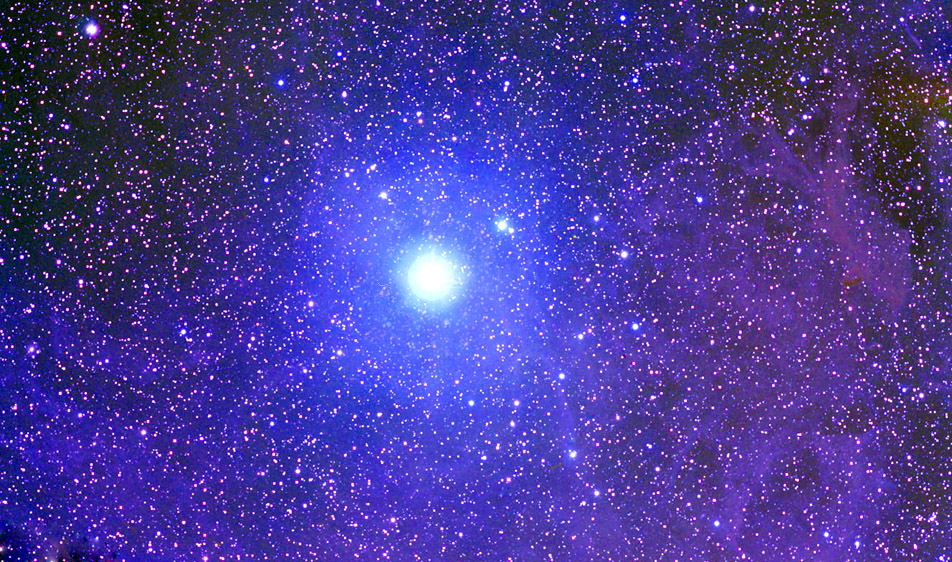
Tonight in Astronomy we were shown the different telescopes that are available to us. We also had time to brainstorm for our class trip. I searched the internet to come up with ideas for places to visit and listed several for the class to think about.
I will be borrowing my parents' telescope for the remainder of the semester to hopefully get a better view of the heavens.
Thursday, February 21, 2008

February 21, 2008
ONE SHOT, ONE KILL:
U.S. Navy Missile Strikes Down Dead Satellite
Today the Pentagon released a statement confirming a direct hit to the defunct spy satellite that was in danger of crashing into Earth, possibly injuring people with it's dangerous fuel. The satellie was 130 miles above the Earth at the time of impact. Relatively, the moon is in orbit 238,000 miles from Earth. International Space Station is 220 miles from Earth. A fireball was seen from the space observatory indicating that the dangerous fuel cell was hit. Most satellites that fall to Earth have no fuel left, but in this instance mechanical failure was to blame for the loss of power. This broken satellite has been falling back to Earth with a full fuel tank since 2006.
U.S. Navy Missile Strikes Down Dead Satellite
Today the Pentagon released a statement confirming a direct hit to the defunct spy satellite that was in danger of crashing into Earth, possibly injuring people with it's dangerous fuel. The satellie was 130 miles above the Earth at the time of impact. Relatively, the moon is in orbit 238,000 miles from Earth. International Space Station is 220 miles from Earth. A fireball was seen from the space observatory indicating that the dangerous fuel cell was hit. Most satellites that fall to Earth have no fuel left, but in this instance mechanical failure was to blame for the loss of power. This broken satellite has been falling back to Earth with a full fuel tank since 2006.
Wednesday, February 20, 2008
February 20, 2008

Tonight there was a total lunar eclipse. I have never took the time to observe an eclipse before, so being able to watch this one happen through a telescope was amazing. At 7:15 the eclipse could already be seen as a sliver of brown creeping across the moon, from the lower left corner. When I left campus around 8:15, nearly a quarter of the moon was in shadow. I continued to observe the eclipse from home with my family. By 9:30 pm the entire moon was a brownish color. From the research I did before class I learned that the full moon was in the constellation of Leo, with the brightest star being Regulus. Regulus, Saturn and the Moon would form a triangle.
Also tonight I was able to view Saturn using the telescope on campus. It was at the 8 o'clock position to the moon in the south east sky around 7pm. Through the telescope I could see the rings of Saturn, which we learned would not be visible soon due to Saturn tilting on its axis and the rings appearing edge-on. The following web site has a demonstration of Saturn tilting: http://demonstrations.wolfram.com/SaturnsDisappearingRings/aringRings/ .
Also tonight I was able to view Saturn using the telescope on campus. It was at the 8 o'clock position to the moon in the south east sky around 7pm. Through the telescope I could see the rings of Saturn, which we learned would not be visible soon due to Saturn tilting on its axis and the rings appearing edge-on. The following web site has a demonstration of Saturn tilting: http://demonstrations.wolfram.com/SaturnsDisappearingRings/aringRings/ .
February 19, 2008

Tonight the sky was finally clear so I braved the frigid temperature to do some sky gazing. The moon was nearly full, which I have researched and found that it's called a Waxing Gibbous. I attempted to take pictures of the moon, but it was so cold that my camera malfunctioned. So I'll attach a sample photo of a waxing gibbous moon. According to http://www.heavens-above.com/, the moon is in the constellation of Leo. Leo is the Lion, and sorta looks like a coat hangar. The brightest star in Leo is Regulus.
Thursday, February 14, 2008
Plotting RA and DEC
Tonight in lab we practiced plotting stars on a chart using Right Ascension and Declination. RA is the equilivant of longitude and is measured in seconds, minutes, and hours. Declination is measured in degrees (both positive and negative starting at the celestial equator) and is the equilivant of latitude on Earth. This system was invented by the Ancient Greek astonomer Hipparchus (who I'm researching this semester).

Friday, February 8, 2008
Space Shuttle Goes Unsighted
At approximately 7:15 last night, February 7, the space shuttle and the space station crossed over Sheboygan in the Northwest sky. Unfortunatley, it was too cloudy to spot. Instead of gazing at the actual stars last night, we worked together in groups to make star globes. These turned out to be interesting low-tech tools for observing the sky, year round. To use them, you have to imagine yourself standing inside the globe, then you stand facing north and hold the globe with the current month facing you. From this point you will be able to see what positions the constellations are in at that time.
sky, year round. To use them, you have to imagine yourself standing inside the globe, then you stand facing north and hold the globe with the current month facing you. From this point you will be able to see what positions the constellations are in at that time.Monday, February 4, 2008
Will it ever clear up?

Well, since there are no clear skies in the forseeable future, I decided to do some surfing on the internet for astronomy topics to write about. I found two articles that caught my attention.
The first was titled "Cool Spacedust Survey Goes Into Orbit" by the staff writers at Space Daily, out of the UK. It's basically a press release for the telescope that will be launched this summer out of the Herschel Space Observatory. The students and astronomers at the University of Nottingham will study space dust for a three year period, focusing on dust more than a million light years away. This telescope will be twice as big as the Hubble and will be able to detect very very faint light.
The second article that I read was titled "NASA to Beam Beatles' 'Across the Universe' Into Space" from the offical NASA website. Today (February 4) at 6pm central time, NASA will be transmitting the song 'Across the Universe' into space via Deep Space Network. Today's date marks the 40th anniversary of the song, and the 50th anniversary of NASA. The song will be aimed at Polaris 431 LY away.

The movie 'Across the Universe', which has nothing to do with space is also being released today, and on a personal note I loved the movie and recommend it to everyone.
Friday, February 1, 2008
January 31, 2008

Tonight was our first lab, and per instructions, I am setting up this web blog to record my diary entries.
Subscribe to:
Posts (Atom)